UFC 264: Poirier vs. McGregor 3
Dustin Poirier defeats Conor McGregor by TKO (doctor stoppage)
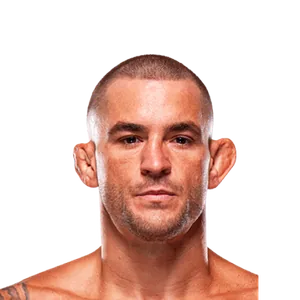

Round 1 · 5:00
Poirier vs McGregor — Lightweight · UFC 264: Poirier vs. McGregor 3
Predictions summary
What happened
The result, the defining moments, and what the verdict means.
McGregor opened with a kick-heavy southpaw attack, but Poirier forced grappling after a guillotine attempt and settled on top.
Poirier used pressure, elbows and posture control through the hard minutes of the round while McGregor worked from his back.
When they returned to their feet late in the round, McGregor stepped back awkwardly and suffered the leg injury that ended the contest.
- Official UFC resultsUFC 264 results
Pre-fight analysis — how we saw it going in
Case for Poirier
Poirier's route was to survive the early McGregor left hand, make the fight physical, and punish every grappling exchange. Once McGregor jumped guillotine, Poirier's top pressure and elbows turned the round away from a clean southpaw striking match and toward the attritional fight he wanted.
Case for McGregor
McGregor still had the faster single shots early, especially the straight left and body kicks before the takedown sequence. His best case was a sharp first-round striking start that kept Poirier honest before the rematch's calf-kick lesson could repeat itself.
What We Were Watching For
- McGregor's kick-heavy opening, including the body attacks and low kicks that frame the first minute.
- The guillotine decision after Poirier's takedown, which gives Poirier top position instead of forcing a stand-up reset.
- Poirier's elbows and posture from guard, where the fight tilts heavily in his direction.
- The final exchange and step back in the closing seconds, which leads to McGregor's leg injury and the doctor stoppage.
Records & career stats
- 28-6-0
- Record
- 22-5-0
- —
- Recent formRecent formWin–loss record over the fighter’s last five bouts, newest first, as carried in their UFC/FightMetric career stats.
- 2-3 last 5
- United States
- Nationality
- Ireland
- —
- Age
- 37
- —
- Height
- 1.75 m
- —
- Reach
- 188 cm
- —
- StanceStanceWhich side a fighter leads from — a striking term, not a religious one. Orthodox: right-handed, left foot and hand forward (the common default). Southpaw: the mirror image, right side forward (usually a left-hander). Switch: changes between the two during a fight.
- Southpaw
- —
- Finish rateFinish %Finish rateThe share of a fighter’s wins that ended inside the distance — by KO/TKO or submission — rather than going to the judges’ scorecards. Higher means more finishes.
- 91%
- —
- Wins by KO/TKOKO wins
- 19
- —
- Wins by submissionSub wins
- 1
- —
- Sig. strikes landed / minStr / minSignificant strikes landed per minuteAverage number of significant strikes a fighter lands for every minute of fight time — a read on striking output and pace. From UFC/FightMetric career stats.
- 5.27
- —
- Sig. strikes absorbed / minAbs / minSignificant strikes absorbed per minuteAverage number of significant strikes a fighter takes for every minute of fight time. Lower is better — it means they get hit less often. From UFC/FightMetric career stats.
- 4.71
- —
- Striking defenseStrike def.Striking defenseThe percentage of opponents’ significant strikes that do not land — strikes slipped, blocked or evaded. Higher is better. Not the same as striking accuracy, which counts your own strikes that land. From UFC/FightMetric.
- 54%
- —
- Takedown defenseTD def.Takedown defenseThe percentage of opponents’ takedown attempts that are stuffed. Higher means harder to put on the mat. From UFC/FightMetric.
- 67%
- —
- Avg. fight timeAvg. timeAverage fight timeThe mean length of the fighter’s bouts (minutes:seconds) — a rough read on whether they tend to finish early or go the distance. From UFC/FightMetric.
- 07:35
- Lightweight
- Weight classWeight
- Welterweight (moving down)


Career stats per UFC.com; recent form is each fighter's last five bouts. Record is as of fight night; career stats, recent form and win totals are the latest on file and may include this fight. Bars compare each stat on a fixed scale; the “Edge” marker flags the leading corner where the gap is meaningful. The snapshot plots five career rates — output, striking defense, durability (strikes absorbed, inverted), takedown defense and finish rate — each normalised on its own scale.
Videos
Outcome footage, post-fight coverage, and the pre-fight lead-up.
Before the fight (1)
Comments
Who Called It?
How the analysts' picks held up once the cage door closed.
Performance filters use calls resolved before this event.

Current pick evidence
Picked: Dustin Poirier
Fight result: Dustin Poirier · TKO (doctor stoppage)
MMA JOEY transcript pick: Dustin Poirier (winner only).
Analyst track record Track record countsWinner counts resolved calls. Method and Round count only after a correct winner call. Underdog counts picks for a strict underdog in frozen pre-fight odds.Methodology
- Winner Accuracy 66.4% 71 36
- Method Accuracy 46.2% 24 28
- Round Accuracy 24.1% 7 22
- Underdog Accuracy 38.9% 7 11

Current pick evidence
Picked: Dustin Poirier
Fight result: Dustin Poirier · TKO (doctor stoppage)
The MMA Guru transcript pick: Dustin Poirier (winner only).
Analyst track record Track record countsWinner counts resolved calls. Method and Round count only after a correct winner call. Underdog counts picks for a strict underdog in frozen pre-fight odds.Methodology
- Winner Accuracy 65.9% 203 105
- Method Accuracy 52.8% 57 51
- Round Accuracy 32.4% 12 25
- Underdog Accuracy 47.2% 17 19
Analyst picks: MMA JOEY Hit; The MMA Guru Hit.
| Expand row | ||||||
|---|---|---|---|---|---|---|
MMA JOEY
MMA JOEY
Current pick evidencePicked: Dustin Poirier Fight result: Dustin Poirier · TKO (doctor stoppage) MMA JOEY transcript pick: Dustin Poirier (winner only). Analyst track record Track record countsWinner counts resolved calls. Method and Round count only after a correct winner call. Underdog counts picks for a strict underdog in frozen pre-fight odds.Methodology
| Poirier · to win | Poirier · TKO (doctor stoppage) R1 | Hit | Not called | Not called | |
| MMA JOEY transcript pick: Dustin Poirier (winner only). Track record: winner called in 71 of 107 resolved picks. How winner calls are counted | ||||||
The MMA Guru
The MMA Guru
Current pick evidencePicked: Dustin Poirier Fight result: Dustin Poirier · TKO (doctor stoppage) The MMA Guru transcript pick: Dustin Poirier (winner only). Analyst track record Track record countsWinner counts resolved calls. Method and Round count only after a correct winner call. Underdog counts picks for a strict underdog in frozen pre-fight odds.Methodology
| Poirier · to win | Poirier · TKO (doctor stoppage) R1 | Hit | Not called | Not called | |
| The MMA Guru transcript pick: Dustin Poirier (winner only). Track record: winner called in 203 of 308 resolved picks. How winner calls are counted | ||||||
2 of 2 nailed it.
The experts above are a lens, not credentials we conferred — analyst, fighter or betting desk.
No AI predictions are available for this fight yet.
No market odds are available for this fight yet.
Comments are currently closed while we finish moderation and privacy controls.